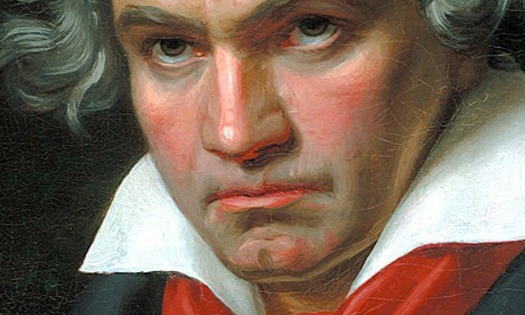
Ludwig van Beethoven
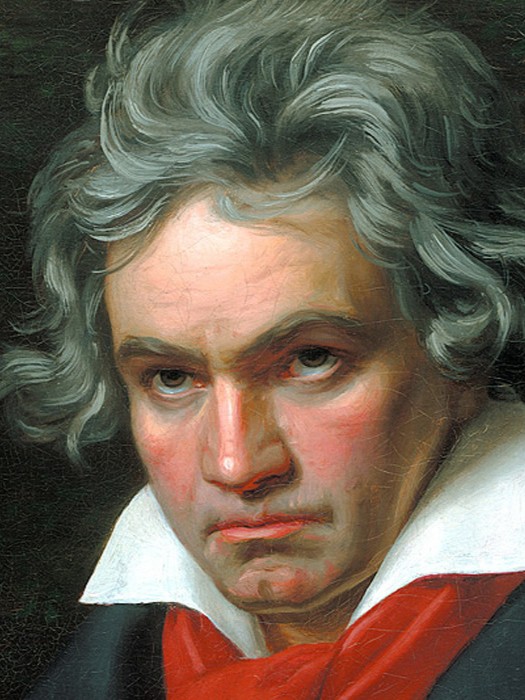
At the beginning of his musical career, Beethoven first made a name for himself as a piano virtuoso. His strengths included free improvisation and fantasy on the instrument. After moving from Bonn to Vienna, his talent soon took him into the highest social circles of the Habsburg metropolis. However, a hearing impairment that worsened over time to complete deafness brought his career as a pianist to a premature end. The illness triggered a crisis, which Beethoven documented in his Heiligenstadt Testament in 1802. Although he remained unmarried throughout his life, Beethoven cultivated many relationships with women in his circle. Famous is his letter written in 1812 to his immortal beloved, whose identity remains unclear to this day. One candidate is Josephine Brunsvik, whose daughter Minona may have been the result of an affair with Beethoven.
As his hearing deteriorated, Beethoven concentrated more and more on composing. While other composers often quickly put their works on paper, Beethoven struggled with every note. He repeatedly reworked and improved his compositions. His nine symphonies stand out in particular from his extensive concertante works. He also composed five piano concertos, a violin concerto, several overtures, the opera Fidelio, the Missa solemnis, and a large number of chamber music works. Beethoven fulfilled his ambition to leave behind a lasting musical legacy for posterity. His popularity remains unbroken, and today he is one of the most frequently performed composers in the world.
Spielplan
Der Spielplan für die kommende Saison ersheint demnächst.
News & Aktuelles: immer informiert mit unserem Newsletter.
Das könnte Sie auch interessieren
.jpg)
%20(1).jpg)
%20(1).jpg)
%20(1).jpg)
.jpg)
.jpg)
%20(1).jpg)
.jpg)
%20(1).jpg)
.jpg)
.jpg)
%20(1).jpg)
%20(1).jpg)
.jpg)
.jpg)
